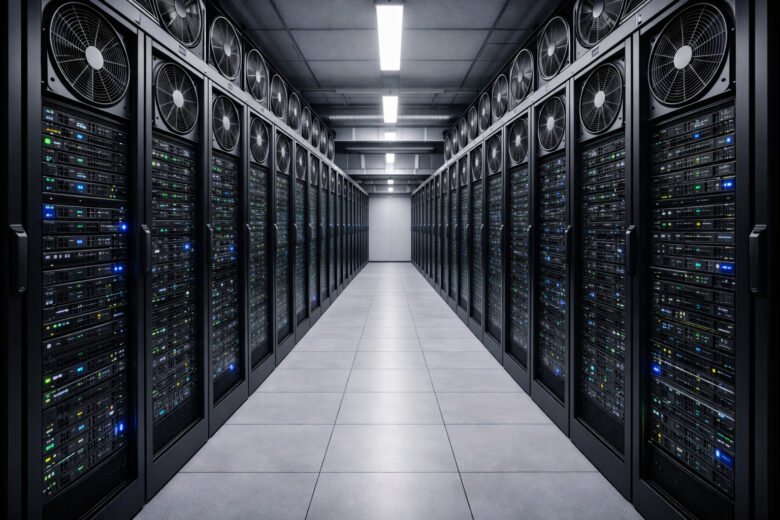
The very first thing many individuals discover inside a big information heart is the sound. Not the servers themselves, no less than not at first. It’s the fixed motion of air. Excessive-pressure cooling programs, management followers, CRAH items, liquid circulation {hardware}, and airflow controls create a background noise that not often stops. After spending time in a number of enterprise and colocation environments over time, I began paying nearer consideration to temperature conduct than the {hardware} itself as a result of thermal stability typically determines whether or not infrastructure stays predictable below sustained load.
Most public discussions round information facilities concentrate on computing energy, synthetic intelligence workloads, or storage capability. Thermal administration will get much less consideration exterior infrastructure circles, despite the fact that cooling programs straight affect reliability, operational price, {hardware} lifespan, and vitality utilization. In keeping with business infrastructure reviews from organizations such because the Uptime Institute and ASHRAE, cooling and energy distribution stay among the many largest operational components inside trendy amenities.
As compute density will increase, particularly in AI-oriented deployments, thermal administration has turn into extra sophisticated than conventional airflow planning alone.
Warmth Is One of many Important Operational Constraints
Servers convert electrical energy into computation, however additionally they generate warmth repeatedly. In smaller workplace environments that warmth could really feel manageable. Inside hyperscale amenities working tens of hundreds of servers on the similar time, warmth accumulation turns into a serious engineering concern.
Just a few years in the past, I noticed a {hardware} validation surroundings the place rack temperatures rose noticeably inside lower than twenty minutes after a managed airflow adjustment throughout upkeep testing. Nothing failed, however the change appeared instantly throughout environmental monitoring dashboards. Operators responded shortly as a result of even localized thermal imbalance can have an effect on {hardware} effectivity if it persists.
Trendy rack densities fluctuate broadly relying on workload sort. Conventional enterprise racks could function inside average thermal ranges, whereas AI-focused deployments utilizing GPU acceleration can eat considerably extra energy per rack. Public infrastructure disclosures from a number of hyperscale operators now reference high-density environments exceeding 30 kW and even 50 kW per rack in specialised deployments.
That shift modifications cooling technique fully.
Older amenities designed round lower-density workloads typically depended closely on raised-floor airflow distribution and perimeter cooling programs. Many more moderen environments more and more rely upon liquid-assisted cooling, rear-door warmth exchangers, sizzling aisle containment, or direct-to-chip thermal programs to handle concentrated warmth masses extra successfully.
Airflow Administration Is Extra Actual Than It Seems
Strolling by a knowledge corridor for the primary time, airflow programs could look repetitive. Traces of cupboards, perforated ground tiles, managed aisles, overhead cabling, and cooling items organized in lengthy symmetrical designs. Operationally, nevertheless, small environmental variations matter.
I observed throughout one infrastructure walkthrough that specialists checked channel temperatures at totally different vertical positions inside the identical rack as a result of warmth distribution was not completely uniform from high to backside. Higher areas close to densely packed networking gear typically skilled noticeably totally different airflow conduct in comparison with decrease storage-heavy sections.
Sizzling aisle and chilly aisle containment stays one of many extra broadly adopted thermal administration approaches. The concept is comparatively clear: separate consumption airflow from exhaust warmth to scale back circulation and enhance cooling effectivity. In observe, sustaining correct containment requires steady adjustment.
Blanking panels, cable openings, underfloor stress stability, rack placement, and even partially empty cupboard sections can affect airflow conduct. In keeping with ASHRAE thermal pointers, poorly managed bypass airflow can cut back cooling effectivity significantly throughout bigger deployments.
The small print typically turn into seen throughout upkeep home windows somewhat than regular operation. After gear modifications or infrastructure growth, thermal patterns typically shift in methods operators didn’t initially predict. Environmental sensors often detect these modifications shortly, though the response course of could embrace airflow recalibration, energy adjustment, or workload redistribution.
Liquid Cooling Is Rising Alongside AI Infrastructure
For a few years, quite a few enterprise amenities depended primarily on air cooling. That mannequin nonetheless exists broadly, particularly in moderate-density environments, however AI-related compute development has accelerated curiosity in liquid-assisted thermal programs.
A number of infrastructure analysts have identified that GPU-intensive workloads create warmth concentrations tough to handle effectively by air motion alone. Excessive-performance accelerators can generate vital localized warmth below sustained coaching or inference operations.
In a single evaluate dialogue with infrastructure operators final yr, engineers described how liquid-assisted programs have been not seen as experimental inside some newer deployments. As a substitute, they have been changing into a part of long-term capability planning for particular workload classes.
Direct-to-chip cooling, immersion cooling, and rear-door warmth alternate programs are all being evaluated extra significantly throughout components of the business. Adoption nonetheless modifications significantly relying on facility age, workload sort, capital planning, and operational philosophy.
There are tradeoffs, although.
Liquid cooling programs could enhance thermal effectivity in dense environments, however additionally they introduce totally different upkeep concerns, plumbing necessities, monitoring methods, and operational dangers. Some organizations stay cautious about quick transitions, particularly when present air-cooled infrastructure nonetheless performs effectively sufficient for present workloads.
Environmental Monitoring By no means Really Stops
Thermal administration inside information facilities is closely depending on steady monitoring. Operators monitor temperature, humidity, airflow stress, energy utilization, coolant circulation charges, and hardware-level thermal conduct in close to actual time.
What shocked me throughout a number of facility visits was how a lot consideration operators gave to development consistency somewhat than remoted readings. A quick temperature enhance may not set off speedy concern. Gradual deviation patterns over days or perhaps weeks typically mattered extra.
Environmental dashboards often acquire huge volumes of telemetry information. Trendy amenities could comprise hundreds of sensors distributed throughout energy zones, rack rows, cooling infrastructure, and management programs. Machine learning-assisted monitoring instruments are additionally changing into extra widespread in large-scale environments the place operators try and predict thermal irregularities earlier than limits are exceeded.
In keeping with public reporting from main cloud operators, predictive upkeep and environmental optimization have turn into more and more vital as vitality prices and compute density proceed rising.
Even exterior local weather circumstances can affect operations. Services in hotter climates typically require totally different cooling methods than these working in cooler areas. Water availability, humidity variation, regional utility pricing, and environmental laws all form infrastructure design choices.
Energy Utilization Effectiveness Nonetheless Issues
Energy Utilization Effectiveness (PUE) stays some of the referenced effectivity measurements within the information heart business. The measurement compares complete facility vitality utilization towards the vitality used straight by computing {hardware}.
Decrease PUE values usually present extra environment friendly infrastructure operation, though interpretation requires context. Local weather circumstances, workload density, redundancy necessities, and facility age all affect achievable effectivity ranges.
A number of hyperscale operators publicly report yearly PUE averages near or beneath 1.2 in some amenities. Smaller enterprise environments typically function increased relying on infrastructure design and cooling structure.
I’ve seen conditions the place thermal optimization tasks delivered measurable effectivity enhancements with out main {hardware} alternative. In a single enterprise deployment evaluate, comparatively modest management changes and airflow balancing modifications lowered localized cooling pressure sufficient to enhance environmental consistency throughout a number of rows.
These enhancements weren’t dramatic from the skin. Internally, nevertheless, operators thought-about them vital as a result of small effectivity features turn into financially vital at scale.
Thermal Stability Impacts {Hardware} Reliability
Temperature variation impacts greater than vitality utilization. Sustained thermal imbalance might also affect {hardware} reliability over time.
Storage programs, networking {hardware}, energy distribution gear, and compute nodes all function inside specified environmental ranges. Trendy {hardware} consists of in depth thermal safety mechanisms, however persistent warmth publicity can nonetheless contribute to element degradation or surprising failure patterns.
Community operators typically monitor thermal limits conservatively in mission-critical environments as a result of infrastructure outages not often come from a single dramatic occasion alone. Extra typically, points develop regularly by overlapping stress circumstances, delayed upkeep, airflow inefficiencies, or localized environmental instability.
A balanced perspective issues right here as a result of not each facility faces an identical threat ranges. Some newer hyperscale campuses function with superior thermal modeling and in depth redundancy. Smaller regional amenities could rely upon older cooling designs that also work successfully however require extra operational oversight throughout seasonal demand peaks.
There may be additionally rising dialogue round sustainability stress. Cooling programs eat vital assets, particularly in high-density environments. Public infrastructure information exhibits growing business concentrate on water-efficient cooling fashions, renewable vitality integration, and adaptive environmental management programs.
The Operational Actuality Behind Secure Infrastructure
Most customers by no means take into consideration thermal administration when opening a cloud software or streaming media content material. From the skin, digital providers really feel separated from bodily limitations. Inside infrastructure environments, warmth stays some of the fixed operational components shaping system conduct.
After spending time observing each enterprise and carrier-scale environments, I observed that skilled operators typically talk about airflow and thermal conduct with the identical degree of consideration that software program groups give to software efficiency. Stability is determined by each.
The expansion of AI workloads, regional cloud growth, and high-density compute environments will doubtless preserve thermal engineering close to the middle of infrastructure planning for years forward. Cooling programs are not handled as background utilities in lots of amenities. They’re changing into lively parts inside broader operational technique.