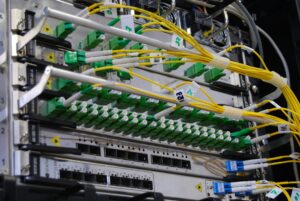

Worldwide communication systems rely on a broad infrastructure composed of fiber routes, routing equipment, data centers, and telecommunications exchanges that coordinate the movement of information across regions. Within this framework, billions of devices connect through layered networks maintained by service providers, cloud operators, and international telecommunications carriers. Every message, website request, and cloud interaction depends on this physical and operational structure.
Connectivity at this scale requires continuous coordination between hardware systems and software protocols. Submarine cable networks transmit signals across oceans, metropolitan fiber systems connect urban centers, and routing platforms direct traffic between independent networks. At the same time, large data centers provide the computing resources that process incoming requests and deliver content to users around the world.
These elements function as parts of a unified system rather than isolated technologies. Network providers maintain transmission routes, exchange points enable traffic to pass between networks, and platform operators manage the computing environments that respond to requests traveling across the infrastructure. Together, they form the structural foundation that supports global internet connectivity.
Fiber Networks and the Physical Backbone of Internet Infrastructure
High-capacity fiber optic networks form the primary transport layer of the global internet. Information travels through strands of glass fiber using pulses of light that represent encoded digital signals. These cables connect cities, continents, and data centers through systems capable of carrying large volumes of traffic simultaneously.
Submarine fiber systems represent one of the most critical components of this infrastructure. Installed across ocean floors, these cables link continents through routes that extend thousands of kilometers. Coastal landing stations connect these submarine systems to terrestrial networks, allowing international traffic to move between global communication hubs. A significant portion of intercontinental internet traffic depends on these underwater networks.
Terrestrial fiber systems extend connectivity across land-based environments. Telecommunications providers build long-distance fiber routes along transportation corridors, linking metropolitan regions and regional exchange points. Within cities, fiber distribution networks connect businesses, data centers, and residential service providers.
Signal amplification technologies maintain data integrity across long distances. Optical repeaters positioned along fiber routes strengthen signals that weaken as light travels through cables. Without these systems, transmissions over extended distances would degrade before reaching their destinations.
Infrastructure redundancy plays a key role in maintaining reliability. Multiple cable routes often connect major network hubs, allowing traffic to be rerouted if a segment becomes unavailable due to maintenance, environmental conditions, or equipment failure.
This physical network forms the backbone through which internet traffic flows across continents and oceans.
Internet Exchange Points and Network Interconnection
Internet connectivity depends not only on transmission cables but also on facilities where independent networks exchange traffic. These locations, known as internet exchange points, allow telecommunications providers, content networks, and cloud operators to interconnect directly.
Exchange points typically operate within specialized data center environments designed to support high volumes of network traffic. Routers from participating networks connect through switching infrastructure that enables direct data exchange between providers. Instead of routing traffic through distant intermediaries, networks can exchange information locally at these hubs.
The operational advantage is efficiency. Direct interconnection reduces the number of routing steps required for data to reach its destination, lowering latency and improving overall network performance. Large metropolitan areas often host multiple exchange points where regional and international networks converge.
Traffic volume at major exchange points can reach extremely high levels. These facilities may process terabits of data per second, coordinating communication between hundreds of participating network providers.
Exchange points also support redundancy within internet infrastructure. When multiple providers interconnect at the same location, traffic can shift between alternative routes if one connection becomes congested or unavailable. This flexibility contributes to the resilience of global communication networks.
Data Centers and the Computational Layer of the Internet
Data centers represent the computational infrastructure that processes much of the traffic moving across global networks. These facilities contain large clusters of servers responsible for hosting websites, cloud platforms, enterprise applications, and streaming services. When a user requests a webpage or interacts with an online service, the request typically travels through network infrastructure to a server located within a data center.
The scale of these facilities varies widely. Some contain thousands of servers operating within controlled environments designed for power efficiency and cooling performance. Large cloud providers operate networks of data centers distributed across geographic regions, allowing applications to run closer to users and maintain service continuity even if individual facilities experience disruptions.
Internal networking architecture within data centers plays a critical role in handling incoming traffic. High-speed switching systems route requests between server clusters responsible for specific application functions. Load-balancing mechanisms distribute workloads across multiple servers, preventing individual systems from becoming overloaded during periods of high demand.
Content delivery networks extend this architecture further. By replicating data across multiple data centers worldwide, these systems reduce the distance that information must travel when responding to user requests. Streaming platforms, cloud storage services, and large-scale websites rely on distributed content delivery to maintain consistent performance across regions.
Operational reliability within data centers depends on robust infrastructure design. Redundant power supplies, backup generators, and advanced cooling systems ensure continuous availability of computing resources. Monitoring platforms track server performance, network activity, and environmental conditions to maintain stable operations.
Data centers therefore function as the computational layer that interacts directly with the physical network infrastructure supporting global connectivity.
Routing Systems and Traffic Coordination
While cables transport signals and data centers process information, routing systems determine the path that data takes across the internet. Routers are specialized networking devices responsible for directing data packets toward their intended destinations through interconnected networks.
Each router maintains a routing table containing information about available network paths. When a packet arrives, the router analyzes the destination address and selects the most efficient route based on current network conditions. This process repeats at each routing stage until the packet reaches its destination network.
Routing decisions are influenced by dynamic conditions such as congestion, link failures, and policy preferences between network providers. Dynamic routing protocols continuously update routing tables, allowing network traffic to adapt to changing conditions in real time.
One of the most important protocols governing global routing is the Border Gateway Protocol. This protocol allows independent network operators to exchange information about reachable destinations across the internet. Autonomous networks—including internet service providers, cloud platforms, and enterprise networks—share routing updates that enable packets to traverse multiple systems on their journey.
Routing systems must balance efficiency with stability. Frequent changes in routing tables can introduce instability, while overly rigid structures may fail to adapt when network conditions shift. Maintaining this balance requires coordinated management across multiple independent network operators.
Regulatory and Operational Coordination Across Global Networks
The global internet operates across multiple jurisdictions and regulatory frameworks, requiring coordination between governments, telecommunications providers, and international standards organizations. Policies governing spectrum allocation, telecommunications licensing, and infrastructure investment influence how networks are deployed and maintained.
Regulatory frameworks also address operational security. Governments and infrastructure providers collaborate to protect network systems from disruptions caused by cyber incidents, physical damage, or large-scale outages. Critical infrastructure classification often applies to major telecommunications facilities, reflecting their importance to economic activity and public services.
Standards organizations provide another layer of coordination. Technical bodies define protocols governing routing behavior, data transmission formats, and interoperability between networking equipment. These standards ensure that hardware developed by different manufacturers can function within shared infrastructure environments.
Infrastructure development depends on investment strategies coordinated across public and private sectors. Telecommunications providers fund network expansion, cloud platforms build new data centers, and international consortia construct submarine cable systems connecting continents. Each investment decision affects the capacity and resilience of global connectivity networks.
The coordination required to maintain this infrastructure involves continuous collaboration between technical, regulatory, and financial stakeholders.
Within this environment, the stability of global internet connectivity ultimately depends on the alignment of engineering practices, infrastructure investment strategies, and operational oversight mechanisms across coordinated technological layers.